A good learning environment is about more than furniture, colours and functionality. The acoustic environment plays an important role in both concentration and well-being. In the projects for Vrinneviskolan and Bråvallagymnasiet in Norrköping, acoustics therefore became an integral part of the overall interior concept from the very beginning.
At the newly built Vrinneviskolan, the ambition was to create a modern and adaptable learning environment for pupils from preschool class to Year 5. The school’s modular construction, with its long corridors, presented particular challenges when it came to the interior design.
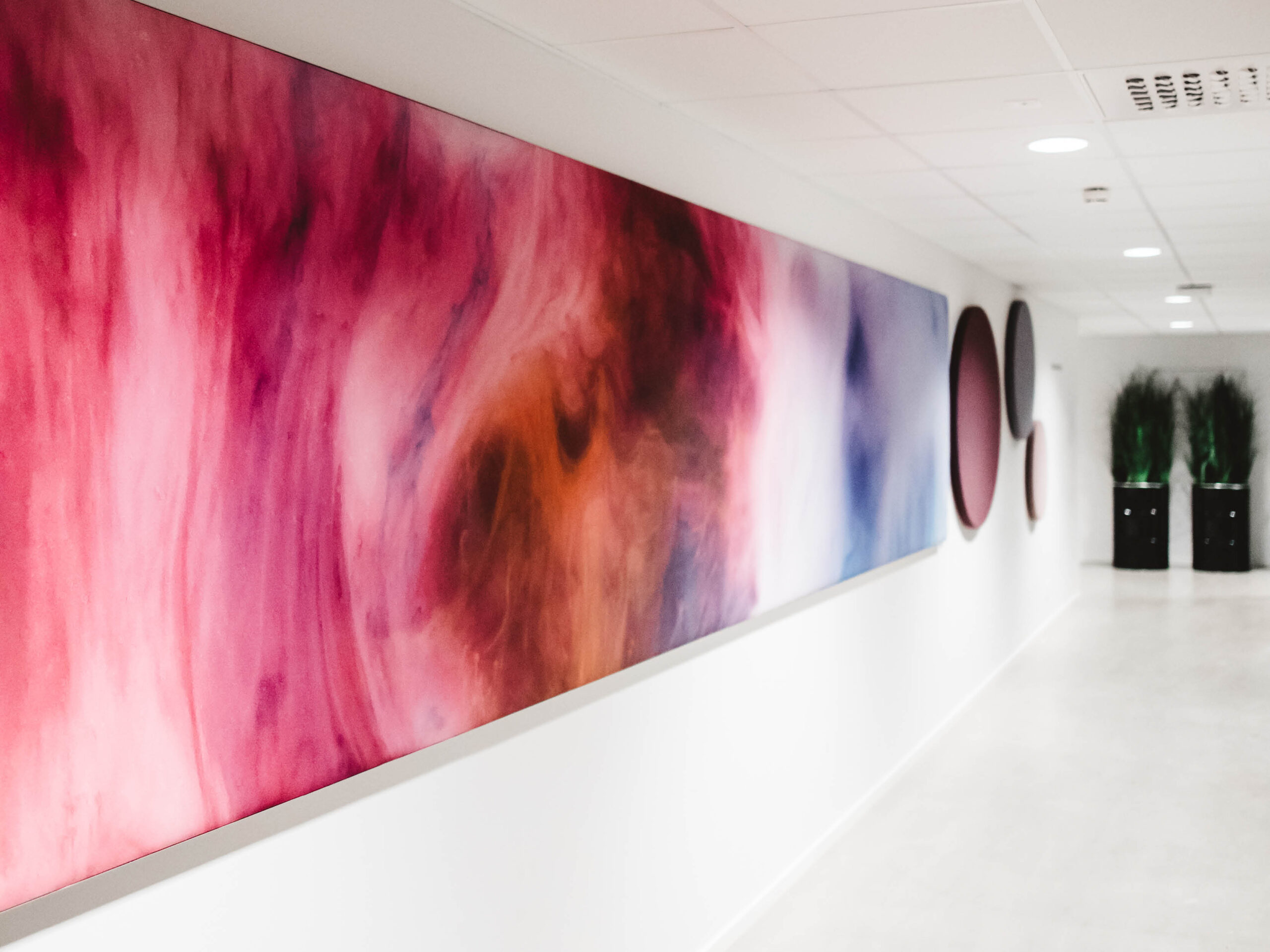
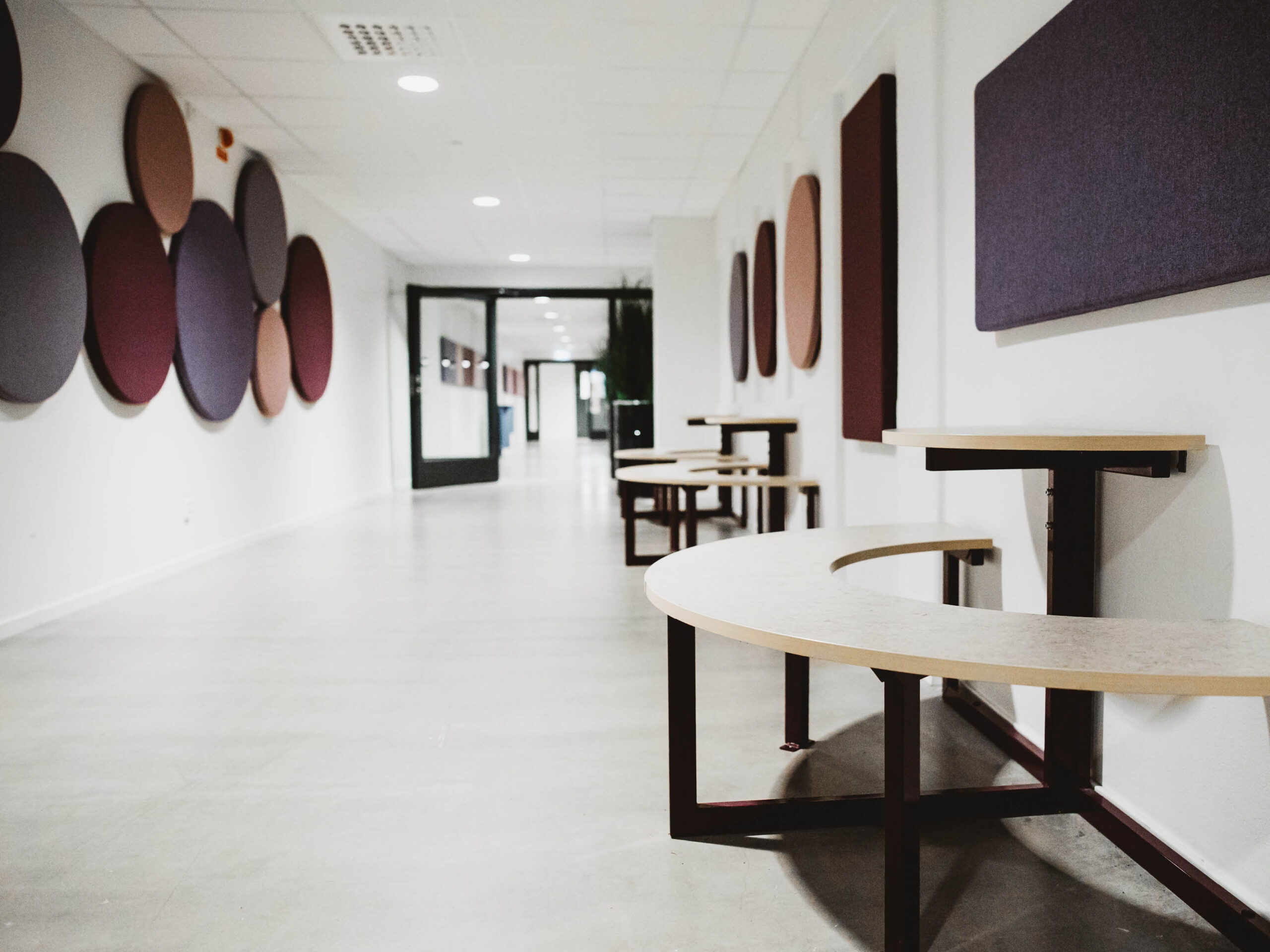
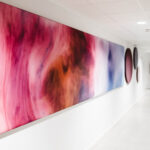
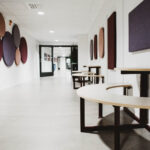
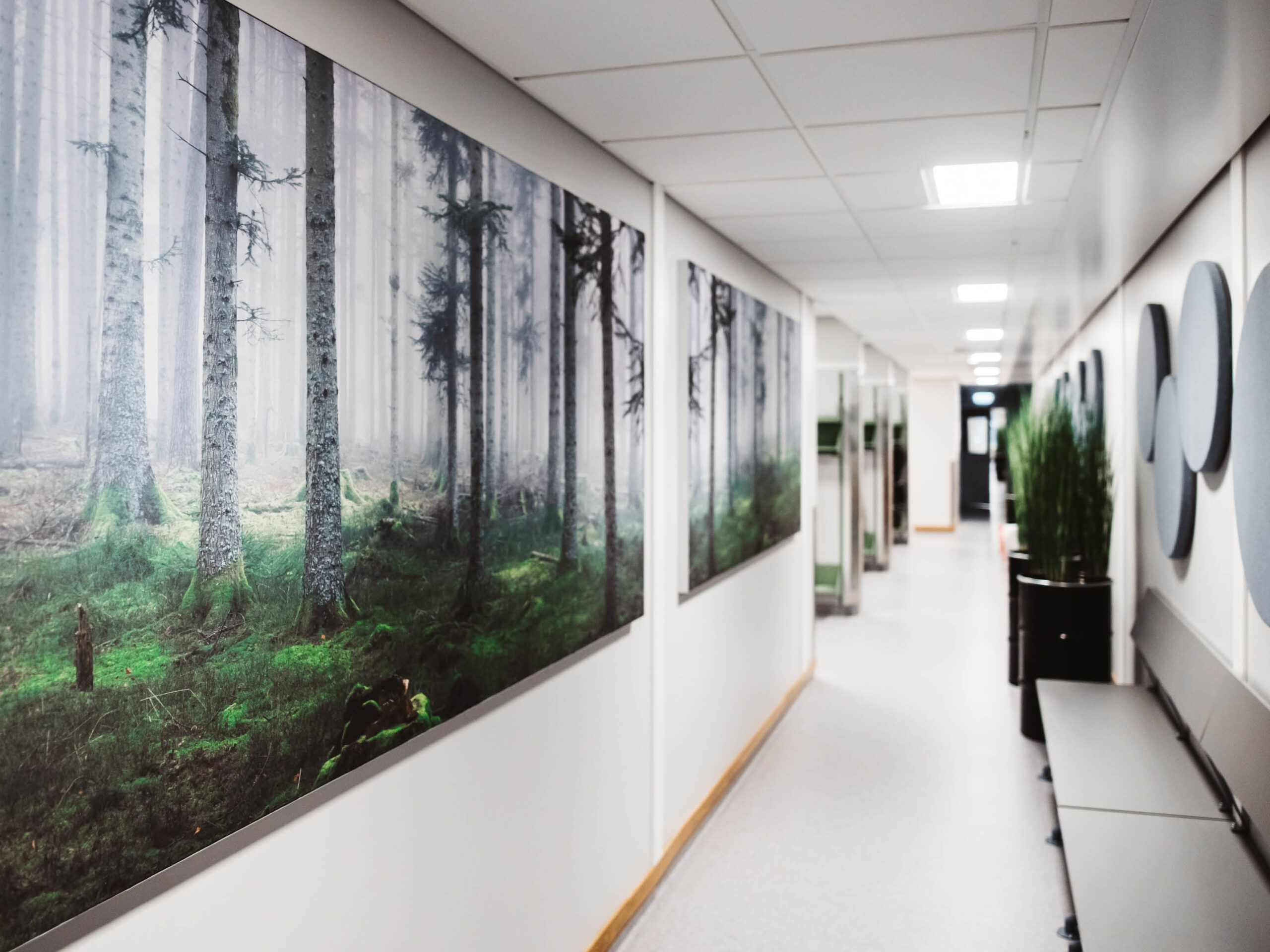
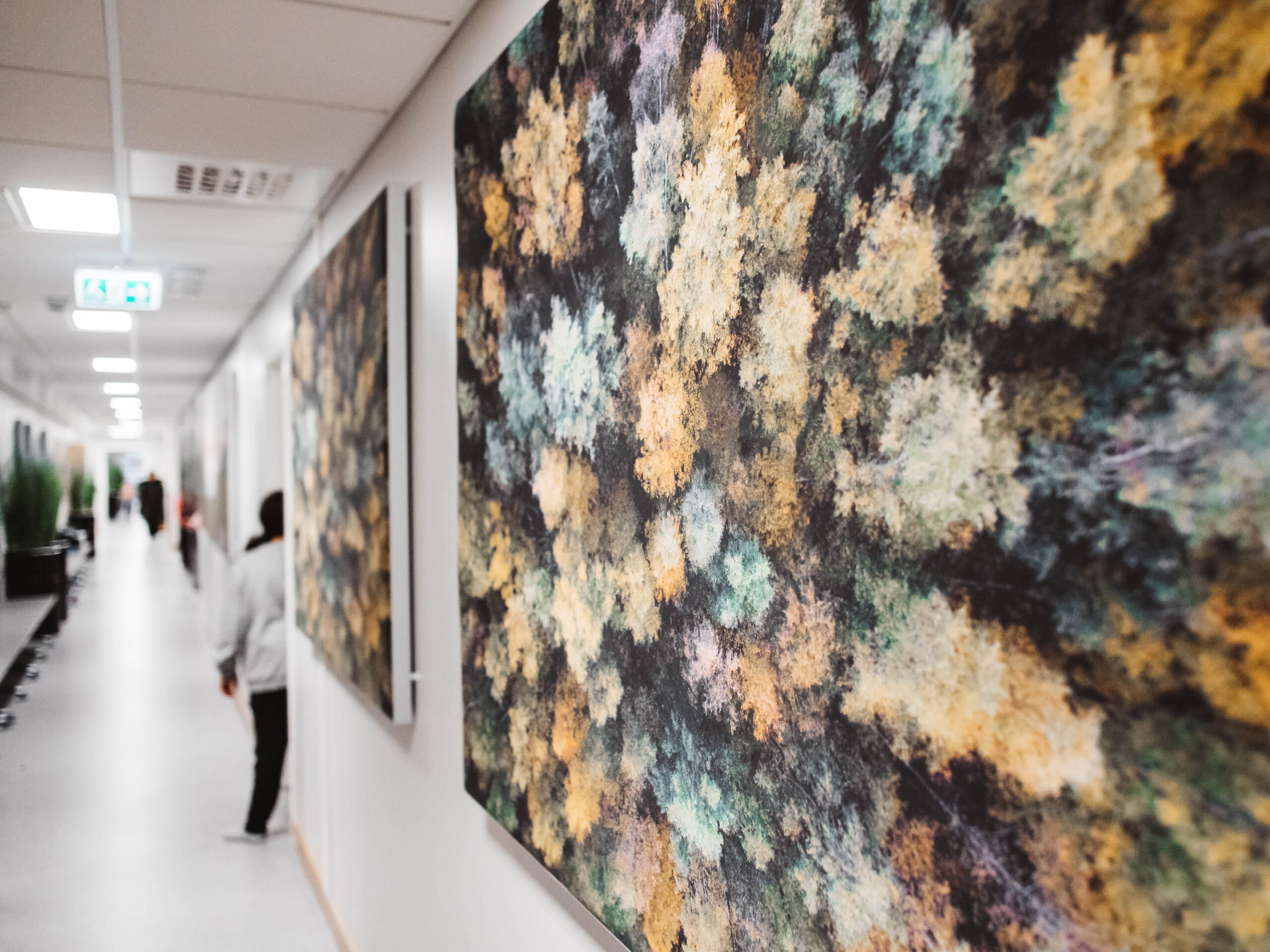
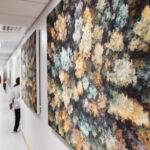
Interior architect Marie Brauner developed a calming nature-inspired concept in shades of blue and green, giving each floor its own identity. The long corridors were broken up with furniture, plants, textiles and large sound-absorbing prints from Akustikmiljö. The ends of the corridors were also transformed into inviting spaces with sofas and large-scale motifs. In this way, previously unused areas became part of the learning environment while also contributing to improved acoustics.
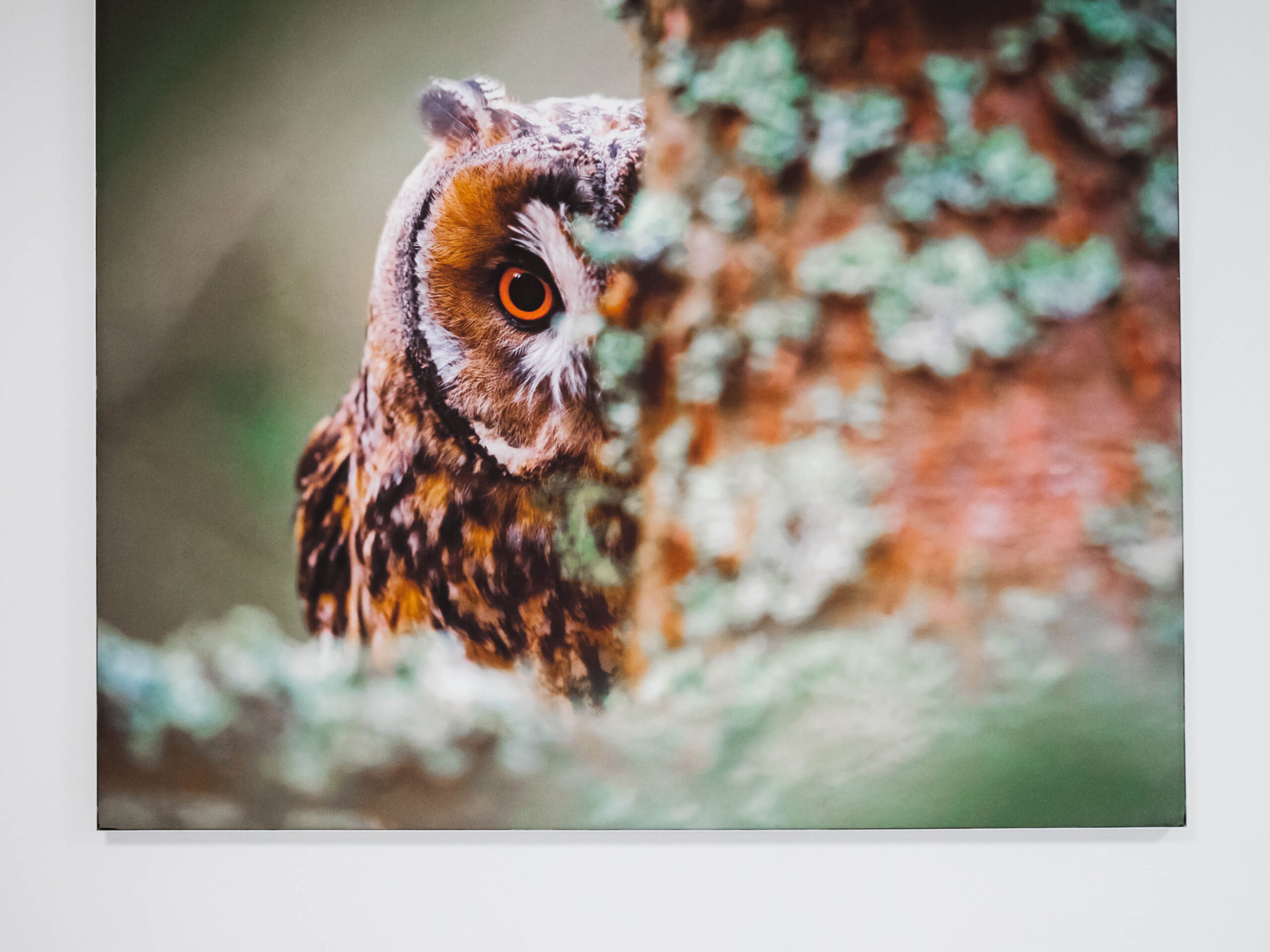
The large prints could be customised to fit the dimensions of the building modules, becoming a natural part of the architecture where visual expression and sound absorption work together.




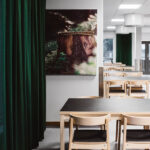
At Bråvallagymnasiet, the conditions were very different. The vocational school is housed in a former industrial setting with large open spaces and preserved concrete floors. The challenge was to retain the character of the building while creating a modern, welcoming and functional learning environment.
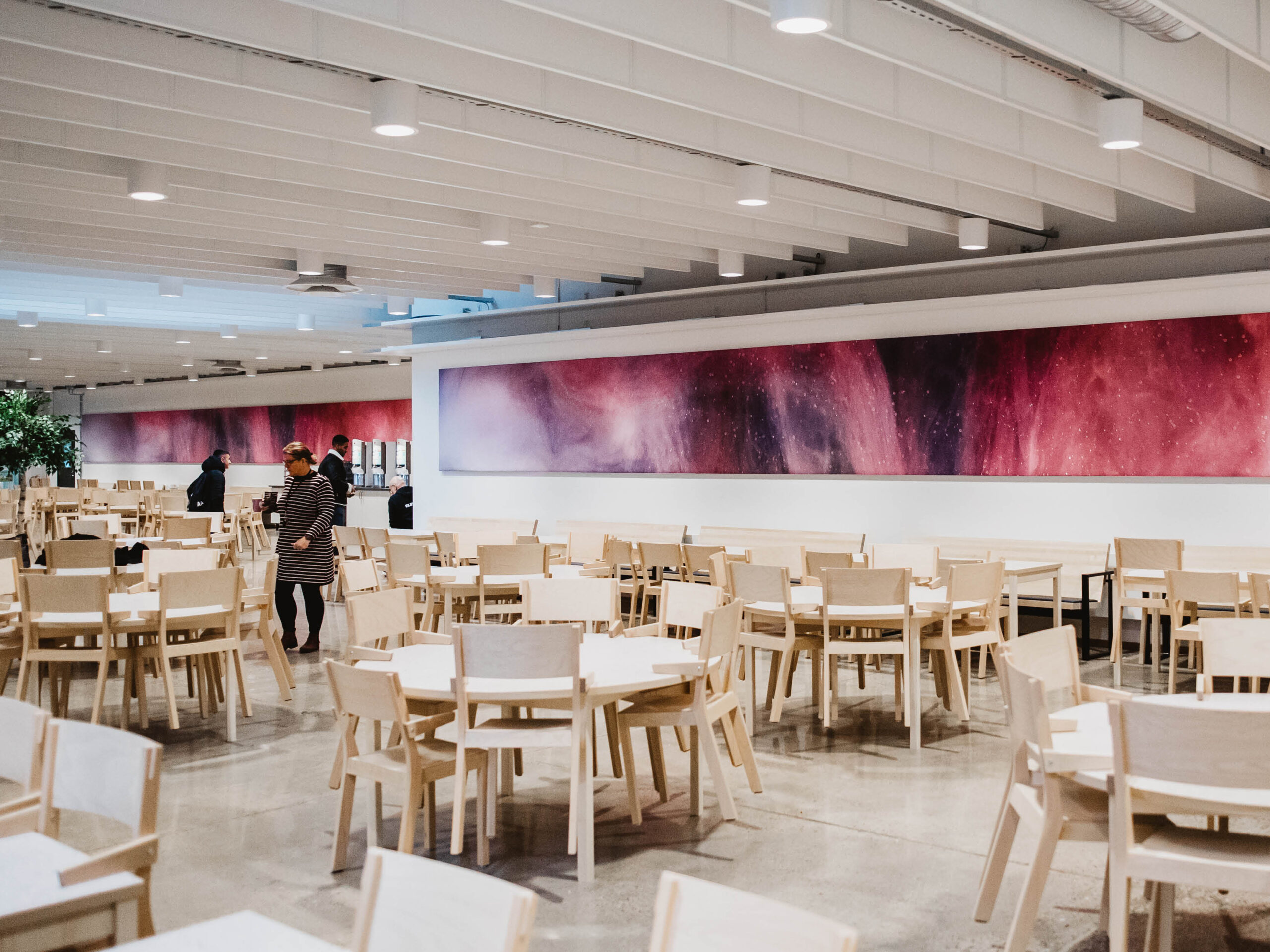
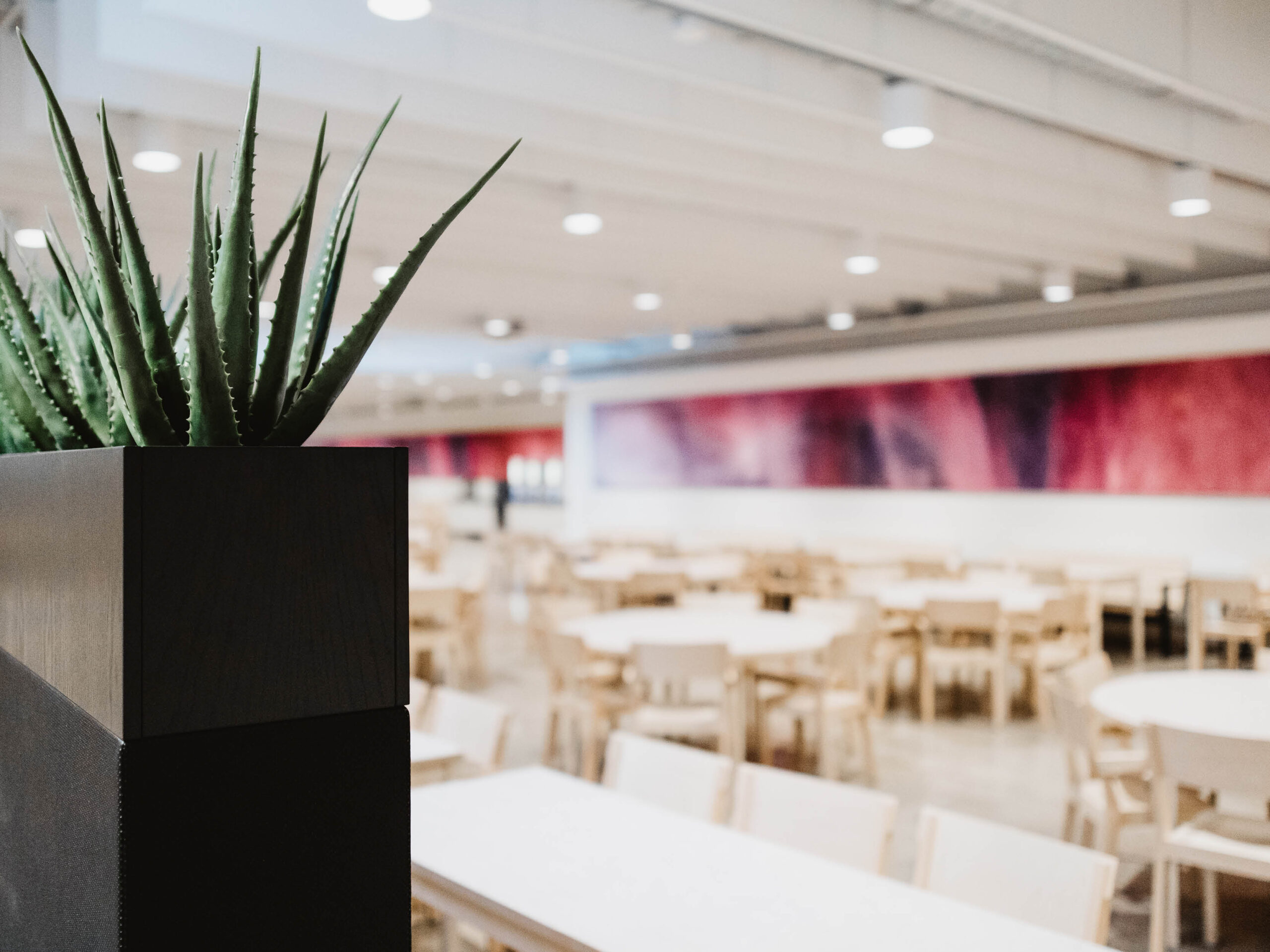
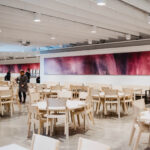
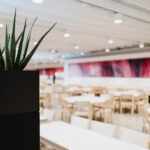
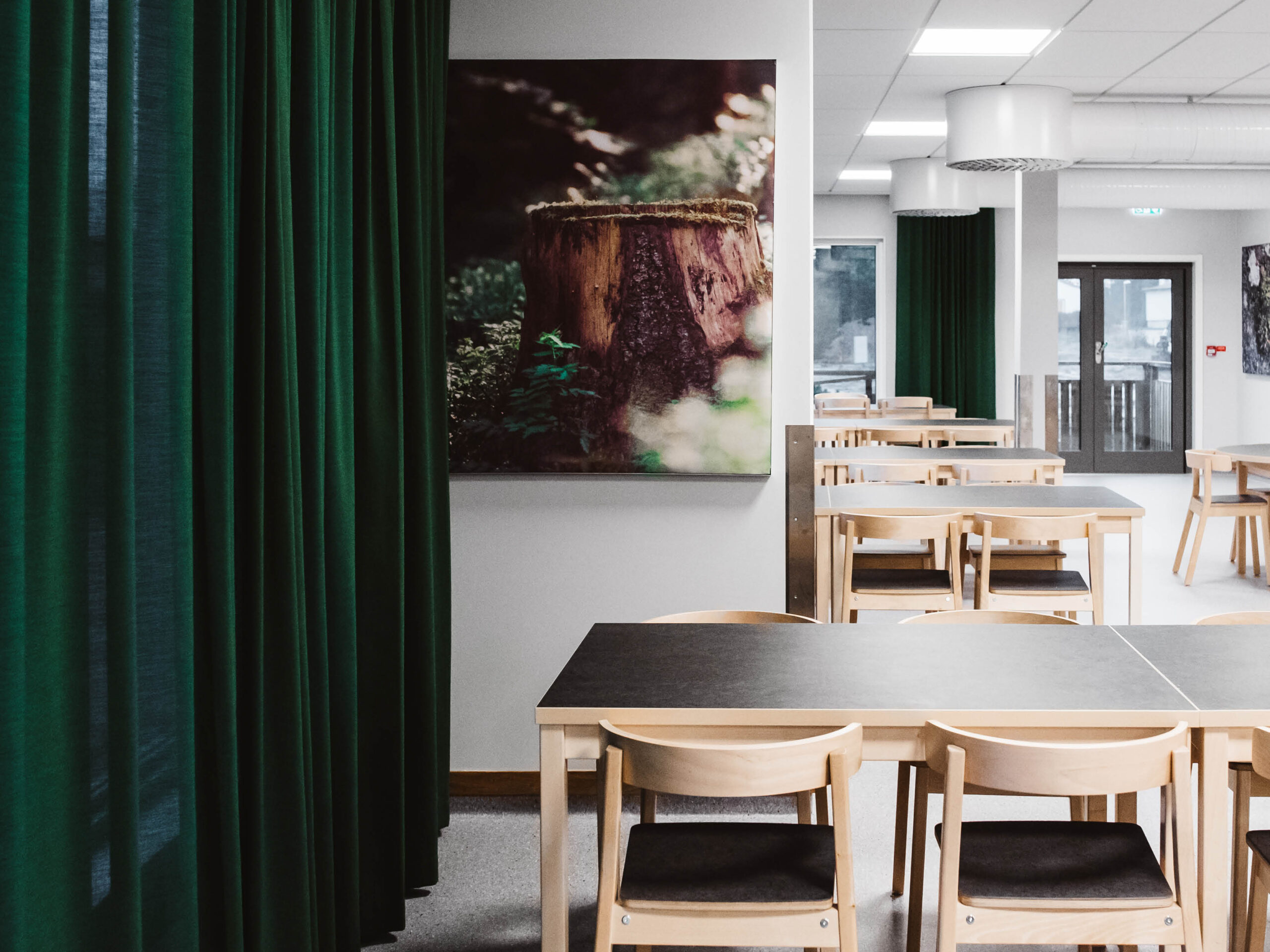
The dining hall in particular, with space for around 400 students, placed high demands on the acoustic environment. A combination of acoustic solutions was used to reduce the spread of sound, including ceiling baffles and sound-absorbing elements integrated into the interior.
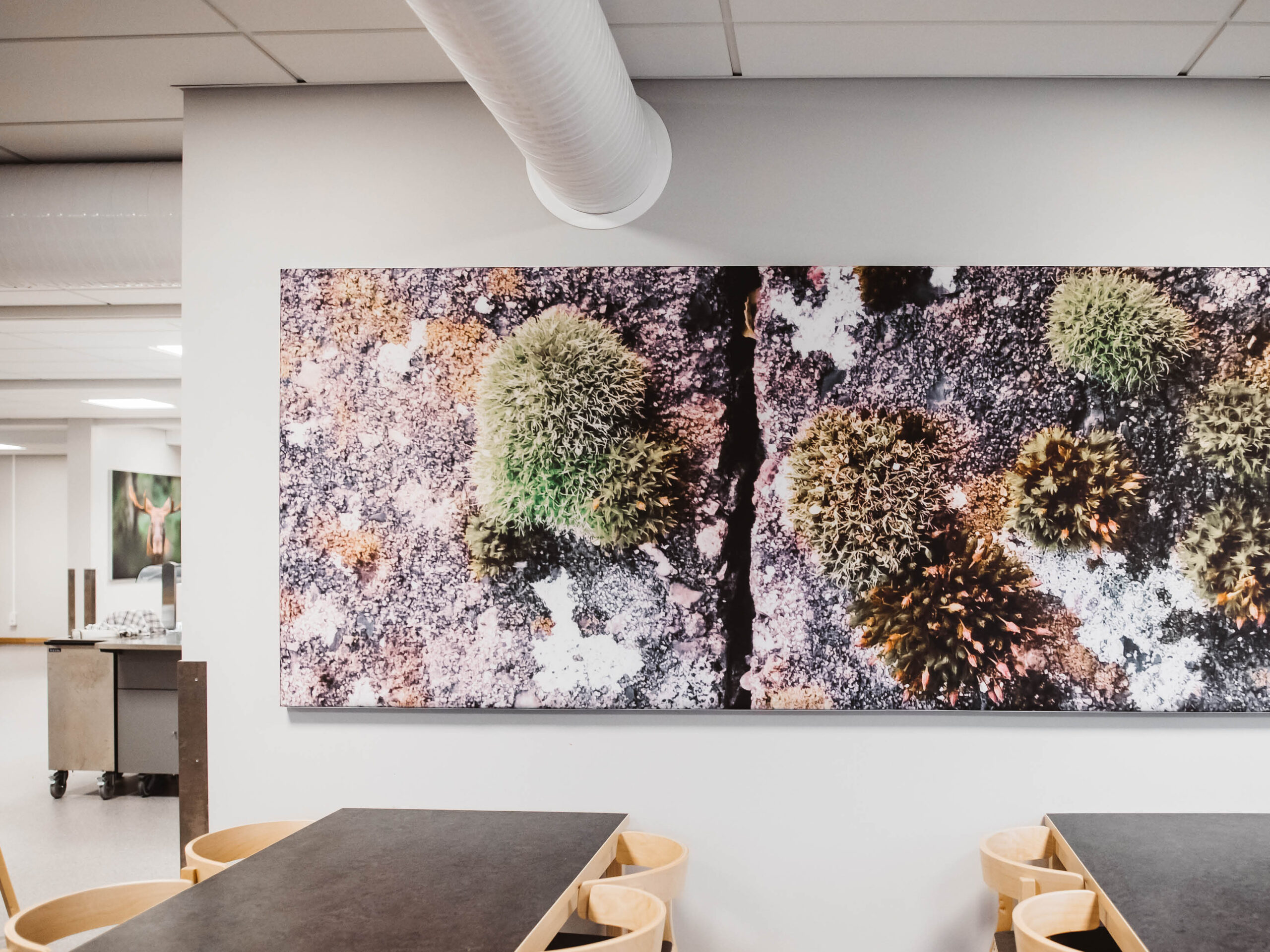
One of the most striking features is the impressive 18-metre-long sound-absorbing print from Akustikmiljö. Its colour palette draws inspiration from the school’s visual identity, using shades of pink, purple and blue. The large-scale print serves both as an effective sound absorber and as a strong visual element in the expansive industrial setting.
Together, the two projects demonstrate how acoustics can be much more than a technical solution. When the acoustic environment is considered as an integral part of the interior from the outset, it can contribute to both calmer spaces and a stronger visual identity.